



|
|
Mission:
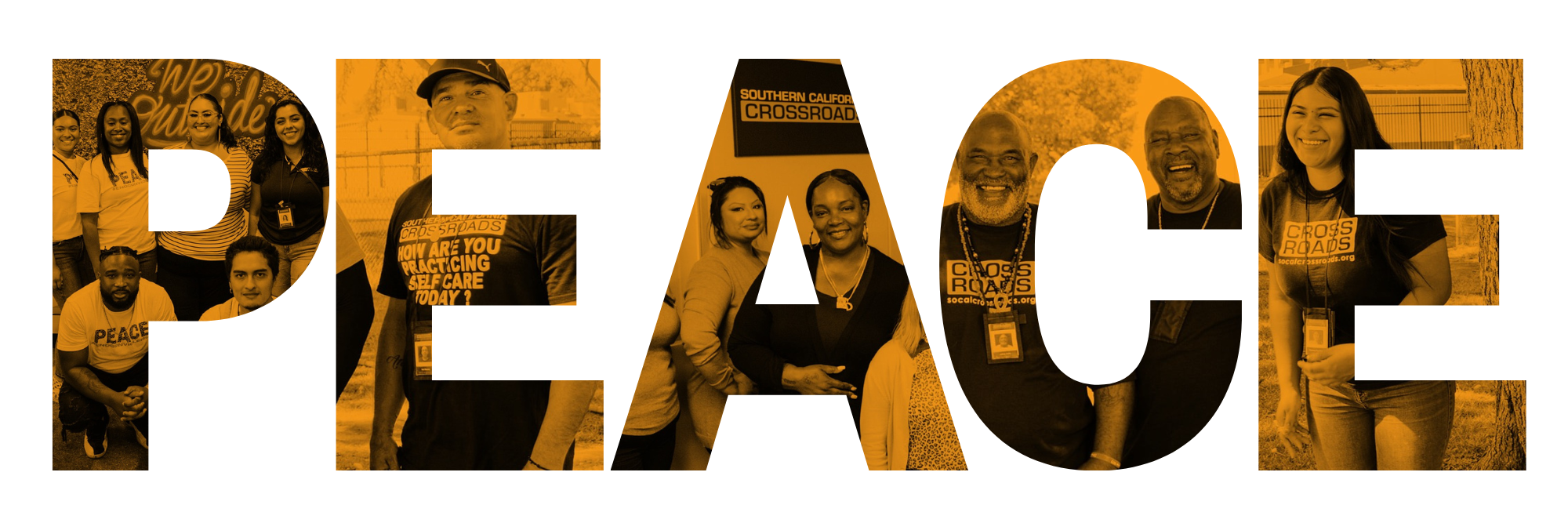
Southern California Crossroads is a non-profit organization that was created to assist under privileged youth who come from low income families in violence plagued communities. Our objective is to lead them to a Healthy, Peaceful, Productive lifestyle through prevention, intervention and re-entry services.
Socal Crossroads embraces You Tube!

The way social media is developing on the internet and with budget cuts across the board throughout the United States, especially in the areas of violence prevention and other youth programs, Southern California Crossroads has decided to embrace social media networks and provide violence prevention videos to the world via You Tube!
It is no secret that millions of youth spend several hours a day on You Tube watching videos on topics ranging from celebrity gossip, world news, tragic incidents and violence! SCC will spend the next several months writing, casting, filming, editing and uploading dozens of short videos (1-5 minutes in duration) that highlight and address issues that youth face today. Topics range from Bullying, Drugs, Domestic Violence, Dating Violence, Gun Violence, Gang Violence, Healthy Eating, etc.
Stay tuned for more information and You Tube channels will be released soon!
The latest information on Bullying

Bullying is a Form of Abuse.
It usually involves repeated acts over time that create or enforce a person's (or group's) power over another person (or group). The victim of bullying is often referred to as a target. Bullying types of behavior are often rooted in a would-be bully's inability to empathize with those whom he or she would target. Bullying consists of three basic types of abuse: Verbal, Physical and Emotional. It typically involves subtle methods of coercion such as psychological manipulation. Bullying can be defined in many different ways. Bullying ranges from simple one on one bullying to more complex bullying in which the bully may have one or more 'lieutenants' who may seem to be willing to assist the primary bully in his bullying activities. Bullying in school and the workplace is also referred to as peer abuse. Bullying can occur in any context in which human beings interact with each other. This includes schools, church, family, the workplace, home and in the community. Bullying can exist between individuals, groups, social groups, social classes, and countries.
Bullying in Schools
Bullying among our youth is a significant problem--and it is steadily increasing. Many experts fear bullying has become so widespread and common, adults are blinded to its extensive harm.
1. It is estimated that 160,000 children miss school every day due to fear of attack or intimidation by other students. Source: National Education Association.
2. A survey conducted by the American Association of University Women reported that 85% of girls and 76% of boys have been sexually harassed in some form and only 18% of those incidents were perpetrated by an adult.
3. Young bullies carry a one-in-four chance of having a criminal record by age 30. Study by Leonard Eron and Rowell Huesman.
4. American schools harbor approximately 2.1 million bullies and 2.7 million of their victims. Dan Olweus, National School Safety Center.
5. One in seven students is either a bully or victim.
6. 56% of students have personally witnessed some type of bullying at school.
7. 15% of all school absenteeism is directly related to fears of being bullied at school.
8. 71% of students report incidents of bullying as a problem at their school.
9. One out of 20 students has seen a student with a gun at school.
10. Mean behavior among kids is a universal problem. In a poll of 232 kids in kindergarten through 8th grade at a Connecticut elementary school, every child claimed to have been the victim of at least one schoolmate's or sibling's meanness in the previous month.
Cyber Bullying
1. Nearly 35% of kids have been threatened online and almost one in five have had it happen more than once.
2. Among this percentage, being ignored and disrespected on Myspace, Facebook and Twitter were the most common forms of cyber bullying.
3. Nine out of ten middle school students have had their feelings hurt online.
4. About 75% have visited a Web site bashing another student.
5. Four out of ten middle school students have had their password(s) stolen and changed by a bully who then locked them out of their own account or sent communications posing as them.
6. About 21% of kids have received mean or threatening e-mails.
7. The psychological and emotional outcomes of cyber-bullying are similar to real-life bullying outcomes, except for the reality that with cyber bullying there is often no escape. School ends at 3 p.m., while the Internet is available at all hours.
8. The primary cyber-bullying location where victimizing occurs, at 56%, is in chat rooms. (My Space)
9. Girls are about twice as likely as boys to be victims and perpetrators of cyber-bullying.
10. About 58% of kids admit someone has said mean or hurtful things to them online. More than four out of ten say it has happened more than once.
11. Cyber-bullying has increased in recent years. In a national survey of 10-17 year olds, twice as many children indicated they had been victims and perpetrators of online harassment in 2005 compared with 2000.
Bullying Publications & Resources
|